
Shipping Basics
Shipping Basics
One of the most common questions I have received during my years working in freight forwarding is:
italicShould we send this shipment by air or by sea?
At first, many customers think the answer is simple: air freight is fast, sea freight is cheap. While that is generally true, real shipping decisions are rarely that straightforward.
I have seen companies choose air freight for urgent cargo and later realize the shipment was not actually urgent. I have also seen businesses choose sea freight to save money but face stock shortages because they underestimated transit time.
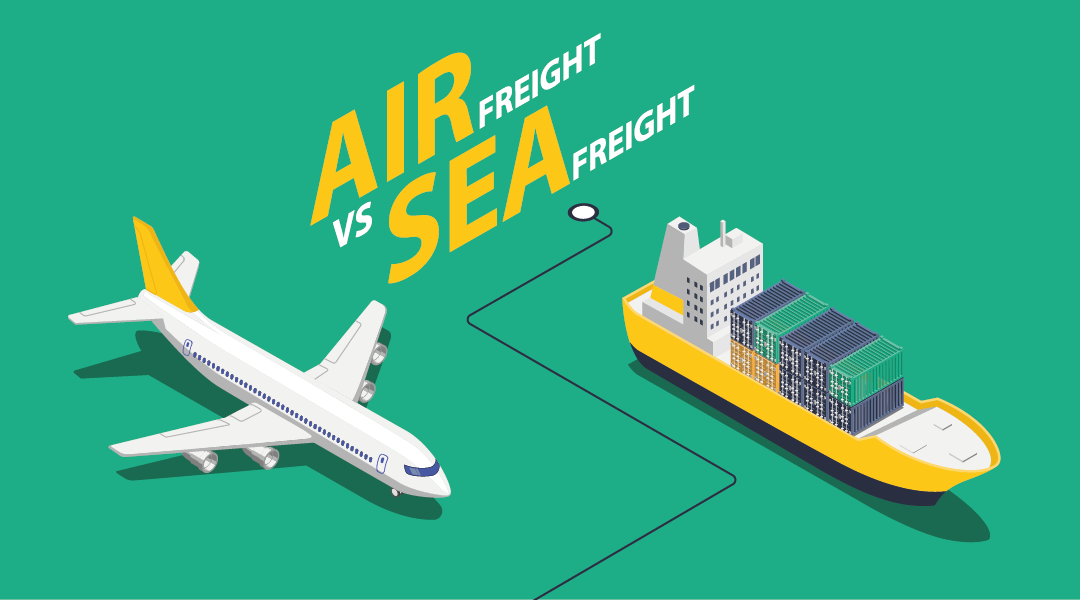
Choosing between air freight vs sea freight depends on several factors: cargo type, urgency, budget, destination, risk, and supply chain requirements.
Let’s look at how both methods actually work in real-world logistics.
Air freight is the transportation of cargo by aircraft. It is commonly used for shipments that require faster delivery, higher security, or better handling control.
Unlike passenger luggage, commercial air cargo moves through dedicated cargo networks operated by airlines and freight companies.
Typical air freight shipments include:
In practical operations, air freight is usually selected when the cost of waiting is higher than the transportation cost.
For example, if a factory production line stops because a machine component is missing, paying a higher air freight charge may actually be cheaper than losing several days of production.
Sea freight (also called ocean freight) is the transportation of goods by cargo ships.
It is the most commonly used method for international trade because ships can carry extremely large volumes at a lower cost.
Sea freight normally moves in containers such as:
Common sea freight shipments include:
Most global supply chains depend heavily on ocean freight because it offers unmatched capacity.
| Factor | Air Freight | Sea Freight |
|---|---|---|
| Speed | Very Fast | Slower |
| Cost | Higher | Lower |
| Cargo Capacity | Limited | Very High |
| Best For | Urgent&Valuable goods | Large Shipments |
| REliablity | Usually predictable | Can face port delays |
| Environmental Impact | Higher emissions per kg | Lower emissions per kg |
| Risk Level | Lower handling time | Longer exposure period |
Selecting the wrong shipping method can affect your entire supply chain.
A common mistake businesses make is looking only at the freight rate.
For example:
A company imports products worth $100,000.
Sea freight might save $5,000 compared to air freight, but if the shipment arrives three weeks late and they lose a major customer order, that saving disappears.
Experienced logistics teams usually calculate the total impact:
The cheapest freight option is not always the most economical option.
A few years ago, I worked on a shipment involving urgent spare parts for industrial equipment.
The customer initially planned sea freight because the cargo was heavy and the cost difference was significant.
However, after checking their production schedule, we discovered the equipment would stop within 10 days without those parts.
Sea freight transit time was approximately 35 days.
Air freight was expensive, but it allowed the parts to arrive within a few days.
The customer selected air freight and avoided a long production shutdown.
The lesson was simple:
Freight decisions should be based on business impact, not only transportation price.
The shipper provides:
The freight forwarder checks available airline options.
Goods are packed according to air cargo requirements.
Important considerations include:
Before departure, the shipment requires customs clearance.
Documents usually include:
Cargo moves through airports and airline networks.
Transit time depends on:
After arrival:
The shipper decides:
FCL means one customer uses the entire container.
LCL means multiple shipments share container space.
The freight forwarder reserves space with a shipping line.
Factors considered:
Required documents usually include:
The container moves:
Factory → Port → Vessel → Destination Port
The biggest delays often happen before or after the ocean journey.
After arrival:
Many new importers compare only the transportation invoice.
They forget:
Air freight pricing is highly affected by chargeable weight.
A large but lightweight shipment may still become expensive because airlines calculate volumetric weight.
A sea shipment is not only the sailing time.
Total time includes:
Air shipments need stronger consideration for weight and size.
Sea shipments require protection against:
Some companies always use sea freight because they believe it is cheaper.
Others always use air freight because they want speed.
The right choice changes depending on the shipment.
Use a Hybrid Strategy
Many successful companies use both methods.
Example:
This balances cost and availability.
Calculate Total Logistics Cost
Do not compare only:
Air freight price vs sea freight price.
Also consider:
Plan Ahead
The earlier you plan shipments, the more options you have.
Last-minute decisions usually result in expensive freight.
Understand Your Cargo
The answers usually make the decision clearer.
Usually no. Sea freight is generally cheaper for large shipments, while air freight costs more because of speed and limited aircraft capacity.
Air freight can take a few days, while sea freight commonly takes several weeks depending on origin and destination.
Both can be safe when handled properly. Air freight usually has shorter handling time, while sea freight involves longer transit and more handling points.
Yes. Less than Container Load (LCL) shipping allows smaller shipments to move by sea without booking a full container.
Often yes. High-value goods commonly move by air because of faster transit and reduced time in the logistics chain.
There is no single answer. Businesses usually combine air and sea freight depending on product type, customer requirements, and supply chain strategy.
Yes. Weather can impact both. Severe storms may affect vessels, while aircraft operations can be affected by extreme weather conditions.
A freight forwarder evaluates cargo details, delivery requirements, costs, and operational risks to recommend the most suitable option.
The decision between air freight vs sea freight is not simply about choosing the fastest or cheapest option.
Good logistics planning means understanding what your business actually needs.
Air freight provides speed and flexibility. Sea freight provides capacity and cost efficiency.
The best shipping strategy is usually the one that protects your supply chain while keeping your costs under control.
In my experience, the strongest importers are not the ones who always choose air or always choose sea. They are the ones who understand when each option makes sense.
This article is provided for educational purposes only. Shipping costs, freight rates, container capacity, and operational requirements may vary by carrier, country, cargo type, and shipment conditions.