
Freight Calculations
Freight Calculations
Anyone who has worked in freight forwarding or warehousing knows one simple truth: pallet planning can make or break a shipment. A small miscalculation in pallet capacity can lead to container wastage, repacking delays, and unnecessary cost escalation. I’ve personally seen shipments delayed just because pallet stacking wasn’t planned correctly.
I still remember one shipment early in my freight forwarding days where we completely miscalculated pallet capacity for a 40ft container. We thought everything would fit perfectly on paper. In reality, we ended up repacking at the warehouse, delaying dispatch by a full day, and increasing handling costs.
That incident taught me something simple but powerful: knowing how to calculate pallet capacity is not just theory—it directly affects cost, space, and delivery timelines.
In logistics, even a small miscalculation can snowball into storage issues, container wastage, or even cargo damage.
Let’s break it down the way it actually works in day-to-day operations.
Pallet capacity refers to the total amount of goods (usually in cartons, boxes, or units) that can safely fit on a single pallet while maintaining stability, weight limits, and handling efficiency.
In simple terms:
It’s how much you can load on one pallet without making it unsafe or impractical to move.
But in real warehouse operations, pallet capacity is not just about space—it’s a combination of:
For example, a pallet might physically fit 100 cartons, but you may only load 80 due to weight restrictions.
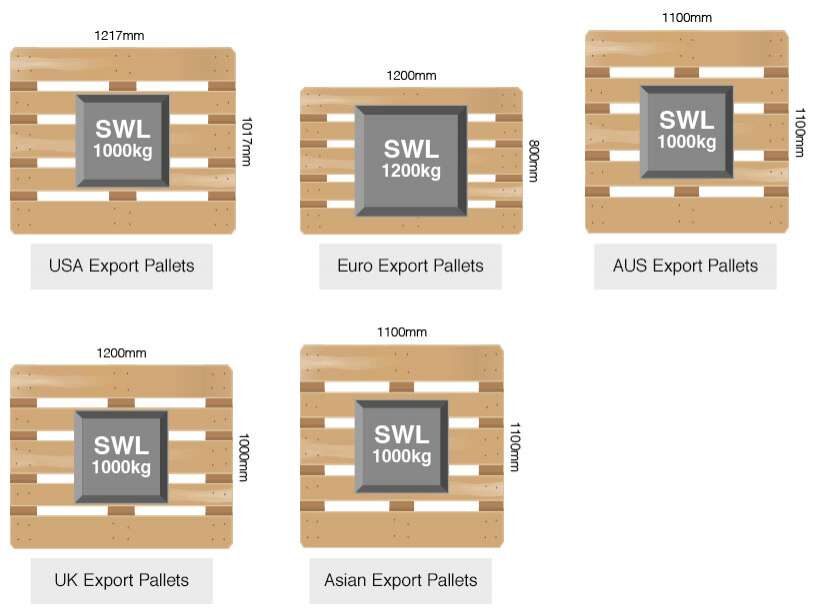
| Pallet Type | Dimensions (cm) | Region |
|---|---|---|
| Euro Pallet | 120 x 80 | Europe |
| UK Pallet | 120 x 100 | United Kingdom |
| US Standard Pallet | 121.9 x 101.6 | USA |
| Asian Standard | 110 x 110 | Asia |
Pallet Capacity = (Cartons per Layer) × (Number of Layers)
If you’ve worked in freight forwarding or warehouse management, you already know this:
Good pallet calculation helps:
I’ve seen companies save 15–20% on freight just by optimizing pallet layout properly.
Let’s say a client is shipping:
Carton size: 40 cm × 30 cm × 25 cm
Quantity: 1,000 cartons
Using standard Euro pallets (120 cm × 80 cm)
At first glance, it looks simple.
You calculate:
But what people often forget:
In one case I handled, a team stacked 10 layers just because it “fit.” The bottom layer collapsed during loading into the container.
That’s the difference between theoretical capacity and real operational capacity.
Let’s go through a practical method used in warehouses and freight planning.
Type Dimensions (cm)
Euro Pallet 120 × 80
US Standard 121.9 × 101.6
UK Pallet 120 × 100
Always confirm pallet type before planning.
Example:
Now divide pallet area by carton footprint.
For Euro pallet (120 × 80):
So:
Cartons per layer = 3 × 2 = 6 cartons
This is where experience matters more than formulas.
Let’s assume:
Now:
So:
Total pallet capacity = 6 × 5 = 30 cartons per pallet
Even if space allows more, weight may stop you.
Example:
30 cartons × 40 kg = 1200 kg ❌ (too heavy)
So you reduce layers:
Final pallet capacity becomes:
25 cartons per pallet (weight-limited, not space-limited)
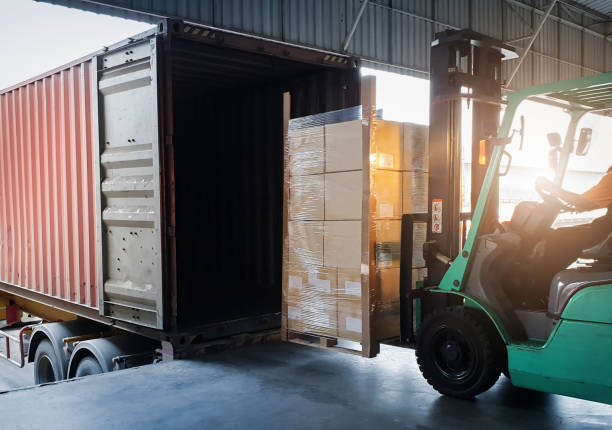
A 40ft container can typically hold 20–22 Euro pallets depending on cargo height and stacking rules. Incorrect pallet planning often reduces this capacity significantly.
| Container Type | Euro Pallets | Notes |
|---|---|---|
| 20ft Container | 10–11 | Weight dependent |
| 40ft Container | 20–22 | Standard loading |
| 40ft HC | 20–24 | Height advantage |
I’ve seen these mistakes repeatedly across warehouses:
Ignoring weight limits can lead to pallet collapse, shipment damage, and serious safety hazards during transport and handling.
Overstacking cartons increases pressure on lower layers, often causing product damage and unstable pallet loads.
Mixing carton sizes on a single pallet reduces stacking efficiency and can create imbalance, leading to shifting during transit.
Not considering container height results in wasted vertical space or pallets that cannot be safely loaded inside the container.
Skipping trial loading simulations increases the risk of poor space utilization and costly loading mistakes in real shipments.
Here are things that only come from working in real operations:
Never calculate 100% utilization. Keep 10–15% buffer.
Sometimes rotating cartons improves layer efficiency by 20–30%.
Ask suppliers about carton compression strength (ECT/BCT values).
Sometimes CBM is more limiting than pallet count.
Pallet capacity is calculated by dividing pallet space (L×W×H) by carton dimensions while considering weight limits and safe stacking height.
Standard pallet sizes are 1200×1000 mm (ISO), 1200×800 mm (Euro), and 48×40 inches used mainly in the USA.
A 20ft container fits around 9–10 standard pallets, while a 40ft container can hold about 20–21 pallets depending on configuration.
Pallet capacity is limited by weight restrictions, carton strength, pallet size, stacking height, and container dimensions.
Weight is more critical for safety compliance, while volume is key for maximizing space efficiency in logistics planning.
In freight forwarding, pallet calculation looks simple on paper but becomes tricky in real operations. Every shipment behaves differently depending on packaging, weight, and handling conditions.
The most important lesson I’ve learned is this: don’t treat pallet capacity as a fixed number. Treat it as a balance between space, weight, and safety.
Once you start thinking that way, your shipping plans become more reliable, and your warehouse operations run much smoother.
This article is provided for educational purposes only. Shipping costs, freight rates, container capacity, and operational requirements may vary by carrier, country, cargo type, and shipment conditions.