
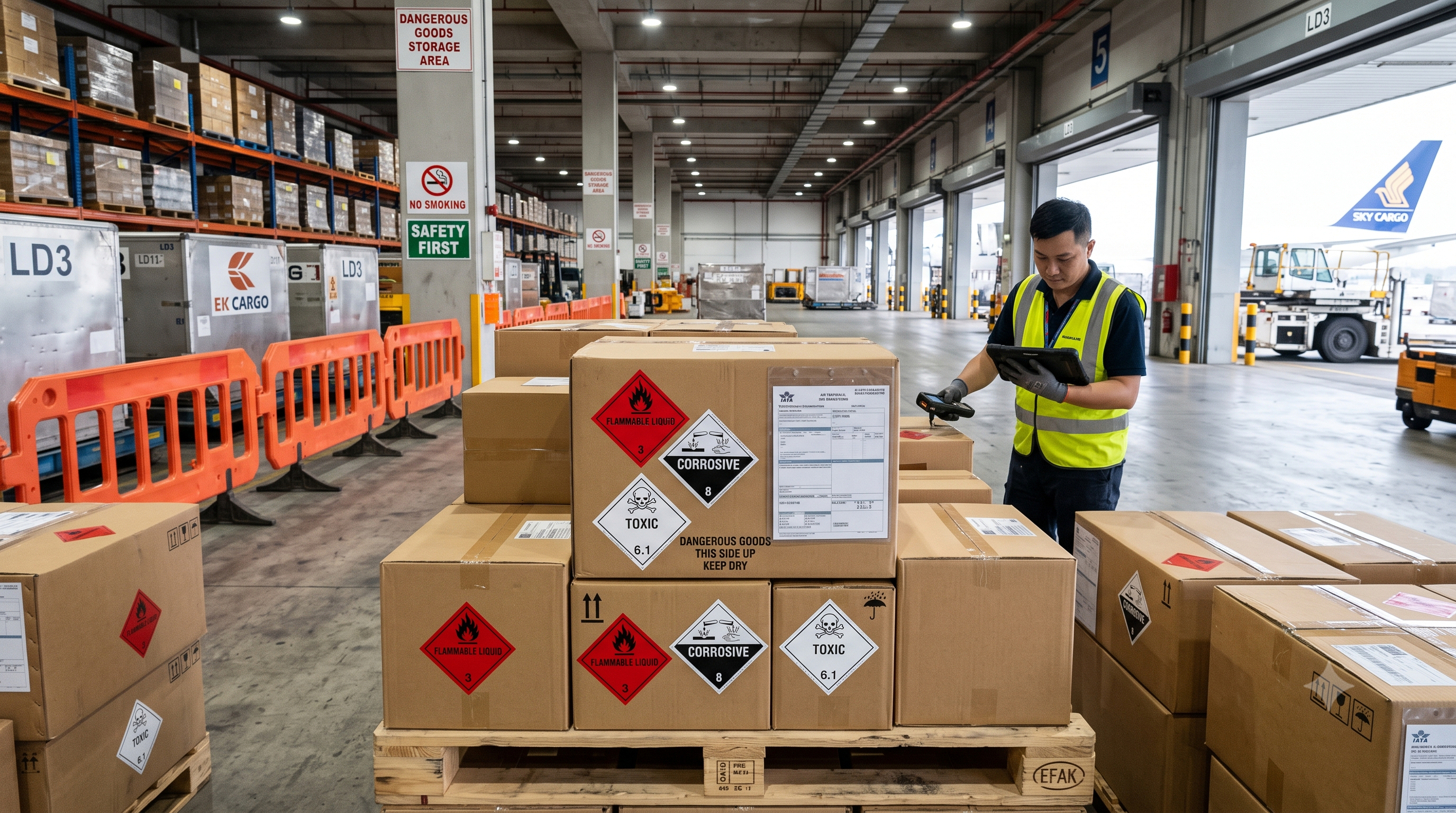
Shipping Guide
Shipping Guide
I still remember one shipment where a customer approached us with what looked like a normal export booking. The cargo was packed, the commercial invoice was ready, and everyone assumed the shipment would move without issues.
The problem appeared during documentation review.
The product contained a chemical component that classified it as dangerous goods. The shipment had already been planned, the truck was arranged, and the customer was expecting an urgent delivery. But because the proper declaration, packaging details, and approvals were missing, the cargo was stopped before departure.
This situation is more common than many businesses realize.
Many exporters and importers think dangerous goods shipping only applies to chemicals or industrial materials. In reality, everyday products like batteries, perfumes, aerosols, paints, cleaning products, and even some electronic devices can fall under dangerous goods regulations.
The biggest challenge is not always the transportation itself. The challenge is understanding the rules before the shipment reaches the airport, seaport, or customs checkpoint.
After working in freight forwarding and logistics operations, one lesson becomes very clear: dangerous goods shipments do not fail because regulations are impossible. They fail because information is incomplete or provided too late.
Dangerous goods shipping refers to the transportation of materials that can create risks to people, property, vehicles, or the environment during handling and movement.
These products require special procedures because they may have properties such as:
Unlike regular cargo, dangerous goods cannot simply be packed, labeled, and shipped using normal procedures.
They require:
The rules can vary depending on the transportation mode.
For example:
A product accepted for sea shipment may have different restrictions when moved by air.
A mistake in dangerous goods handling can create serious operational problems.
From a freight forwarding perspective, the biggest impacts are usually:
Airlines, shipping lines, and customs authorities will not take risks with undeclared or incorrectly declared dangerous cargo.
A shipment can be:
For businesses working with urgent deliveries, these delays can affect customer relationships.
Incorrect dangerous goods declarations often lead to unexpected expenses:
A shipment planned at a certain budget can quickly become much more expensive.
The regulations exist for a reason.
A damaged battery shipment, leaking chemical container, or improperly packed flammable product can create risks during transportation.
Professional logistics companies focus heavily on prevention because fixing a dangerous goods problem after it happens is much more difficult.
Many businesses are surprised when they discover their products fall under dangerous goods categories.
Some common examples include:
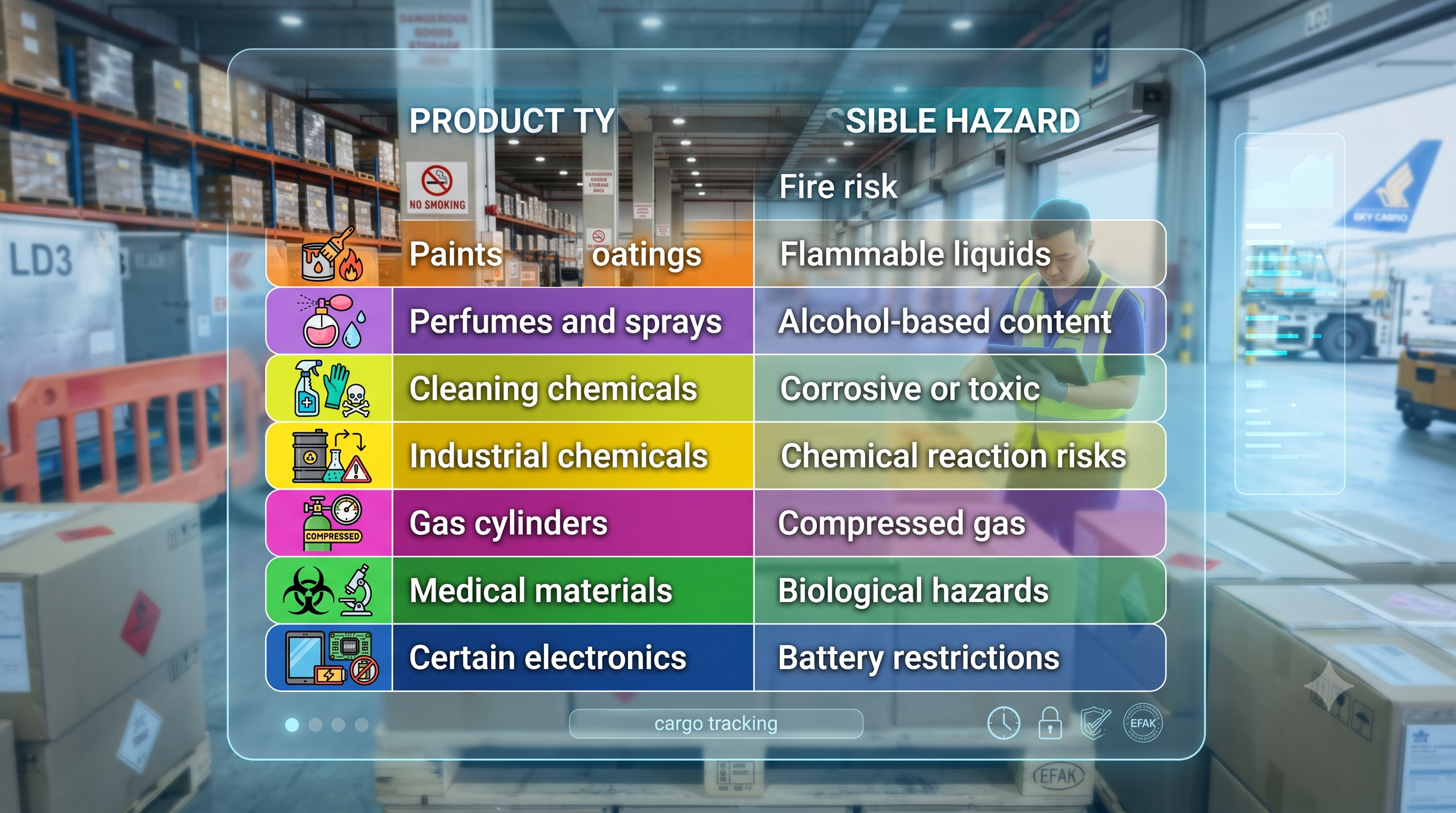
The classification depends on the actual product composition, packaging, quantity, and transportation method.
Before shipping, the cargo must be classified correctly.
Dangerous goods are divided into nine major classes:
Examples:
These have extremely strict transportation controls.
Includes:
Examples include industrial gas cylinders.
Examples:
Materials that can ignite easily.
These can increase fire risks by releasing oxygen or reacting strongly.
Includes products that may cause harm through exposure.
Special handling and approvals are required.
Examples:
Includes products with hazards that do not fit other categories.
A common mistake I have seen is assuming that if a product is not obviously dangerous, it does not require classification. Many issues happen because companies classify products based on appearance rather than technical information.
The first step is understanding exactly what is being shipped.
You need information such as:
The SDS is one of the most important documents because it helps determine classification.
A qualified professional reviews the product details and identifies:
For example:
A lithium battery shipment may require a specific UN classification depending on battery type, capacity, and packaging.
Dangerous goods cannot always be shipped in standard cartons.
Packaging requirements may include:
The packaging depends on the hazard level.
Common documents include:
One missing document can stop the shipment.
Dangerous goods labels communicate risks to everyone handling the shipment.
Labels may indicate:
Incorrect labeling is one of the fastest ways for cargo to be rejected.
Not every airline, shipping line, or courier accepts every type of dangerous goods.
Before booking, confirm:
A shipment accepted from one origin may not be accepted through another route.
One example frequently seen in logistics involves electronics containing lithium batteries.
A customer may think:
A customer may think:
"We are only shipping electronic devices, so it is normal cargo."
However, depending on battery type and configuration, the shipment may require dangerous goods handling.
A common issue happens when:
The result?
The shipment may be delayed, returned, or require reprocessing.
The lesson is simple:
Always disclose the actual product details during the quotation stage, not after booking.
These are things you only learn after handling real shipments:
Always Double-Check Before Final B/L
Never rush approval. One correction later costs money.
Use Sea Waybill for Trusted Buyers
If your client is repeat and reliable, avoid unnecessary delays.
Keep B/L Data Consistent Across Documents
Invoice, packing list, and B/L must match.
Understand Your Incoterms First
B/L handling changes depending on FOB, CIF, EXW, etc.
Communicate With Your Forwarder Clearly
Most B/L issues come from unclear instructions, not system errors
Waiting until cargo is ready is risky.
Classification should happen before:
Writing vague descriptions like:
can create problems.
Authorities and carriers need accurate information.
A product allowed in one country may face restrictions elsewhere.
Always check:
Regular cartons are not automatically acceptable for dangerous goods.
Packaging requirements must match the classification.
A freight forwarder can guide and manage the process, but the shipper remains responsible for providing accurate information.
Incorrect information from the shipper creates problems throughout the supply chain.
When asking for a dangerous goods shipping quotation, provide:
This helps avoid inaccurate quotations.
Dangerous goods shipments usually require more preparation than standard cargo.
Avoid planning them like regular shipments.
Make sure:
Small differences can create unnecessary questions.
Dangerous goods handling requires knowledge and proper training.
A mistake made during booking can create problems several steps later.
Dangerous goods include products that may create safety risks during transportation, such as chemicals, batteries, flammable liquids, gases, and certain industrial materials.
Yes, but air freight has strict requirements. Products must meet airline acceptance rules, packaging standards, labeling requirements, and documentation procedures.
Requirements vary, but common documents include Safety Data Sheets (SDS), Dangerous Goods Declarations, commercial invoices, and packing lists.
Many lithium battery shipments are classified as dangerous goods because of fire risks. The classification depends on battery type, capacity, quantity, and packaging method.
Yes, experienced freight forwarders can help with classification, documentation, carrier selection, and transportation arrangements. However, the shipper must provide accurate product information.
Common reasons include:
Usually, yes. Additional costs may include specialized packaging, handling fees, documentation charges, and carrier surcharges. Costs depend on the product and route.
This article is provided for educational purposes only. Shipping costs, freight rates, container capacity, and operational requirements may vary by carrier, country, cargo type, and shipment conditions.