

Shipping Guide
Shipping Guide
When someone asks, "How much will it cost to ship my freight?", the first mistake many people make is expecting an immediate number.
In reality, freight pricing is not like buying a fixed-price product. The cost depends on many moving factors, including origin, destination, cargo type, weight, volume, shipping method, market conditions, availability, and timing.
After years of working in freight forwarding and shipment operations, I have learned that the correct answer starts with understanding the shipment before discussing the price.
The goal of this guide is to explain how freight costs are calculated, what factors influence pricing, and how businesses can make smarter shipping decisions.
When a customer asks me for a freight quote, my first question is:
Have you shipped before?
Understanding previous shipping experience helps identify the customer's knowledge level, previous challenges, and expectations.
I then ask:
Only after understanding these details can a realistic freight estimate be prepared.
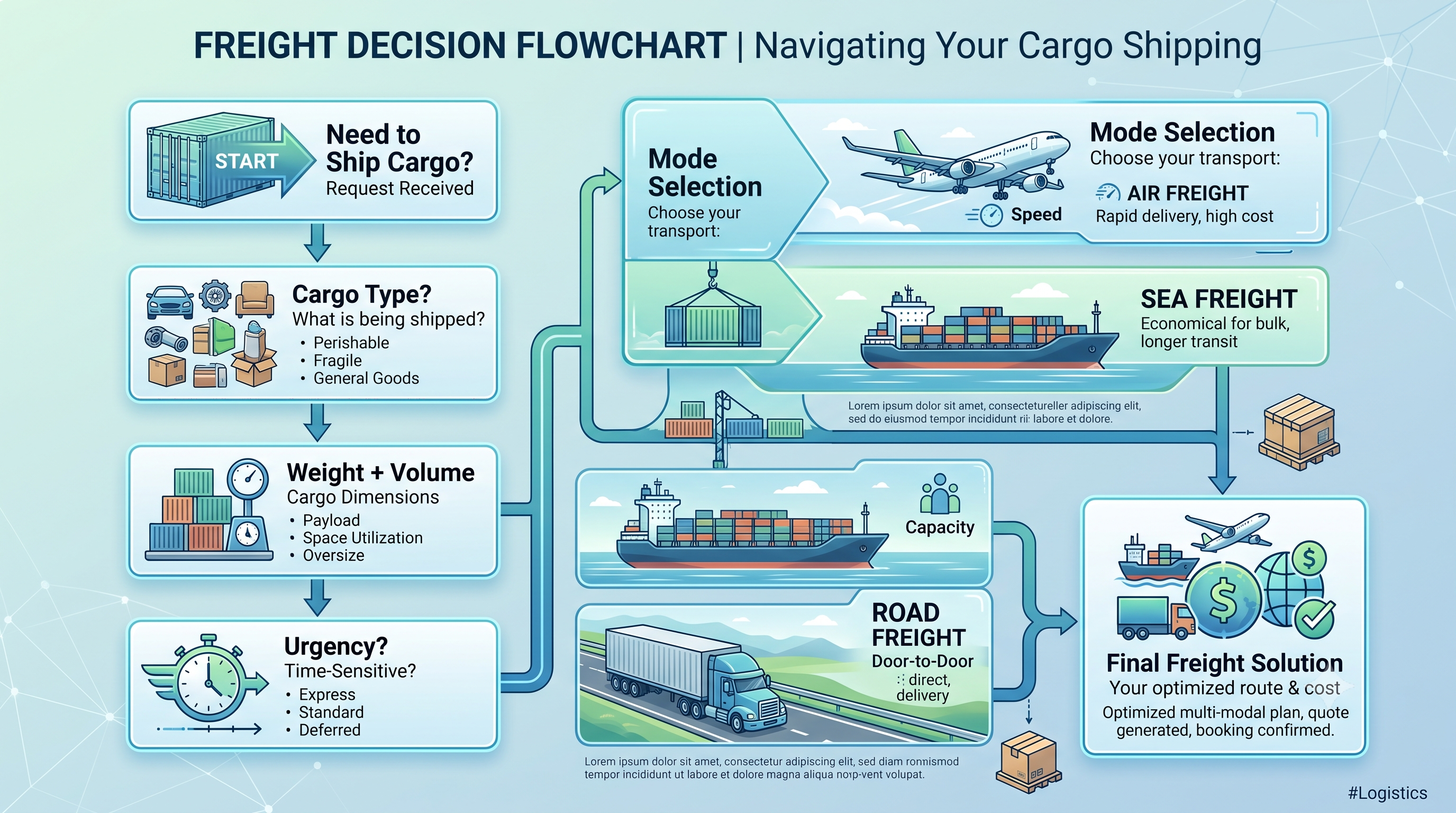
Freight cost is influenced by several major factors:
Here’s what I’ve personally seen it impact:
The shipping route has a major impact on pricing. Different ports, carriers, and regions have different costs and availability.
The product being shipped affects:
Shipping costs depend heavily on cargo weight and space utilization.
For container shipments, the container size matters:
For smaller shipments, chargeable weight and volume are important factors.
The choice between air freight, sea freight, road transport, or a combination depends on urgency and budget.
Air freight is faster but usually more expensive.
Sea freight is slower but often more economical for larger shipments.
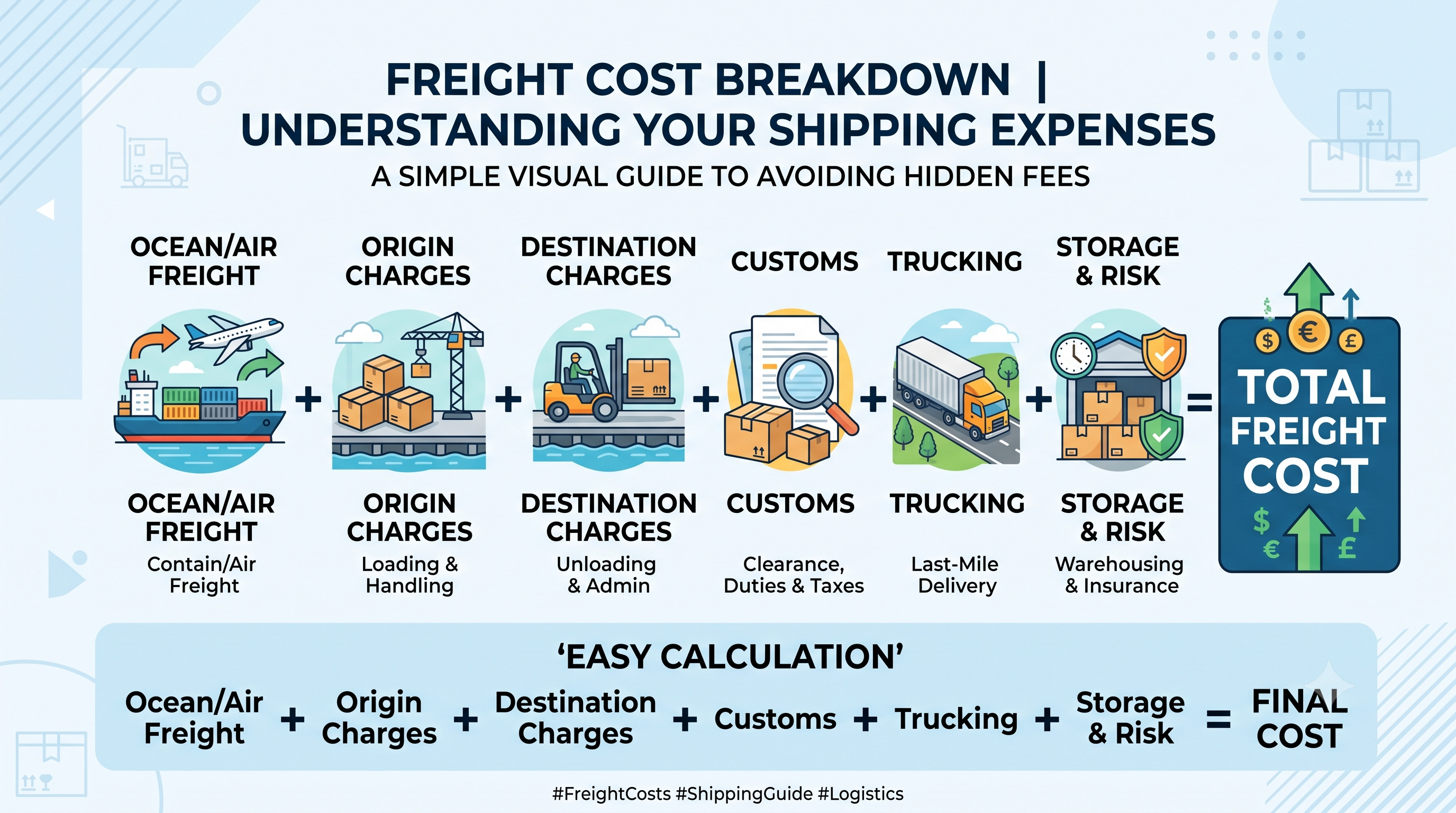
Many businesses focus only on the freight rate and forget additional charges.
Documentation is not only about paperwork costs.
Incorrect or missing documents can delay shipments and create unnecessary expenses.
Businesses should confirm requirements before loading the cargo.
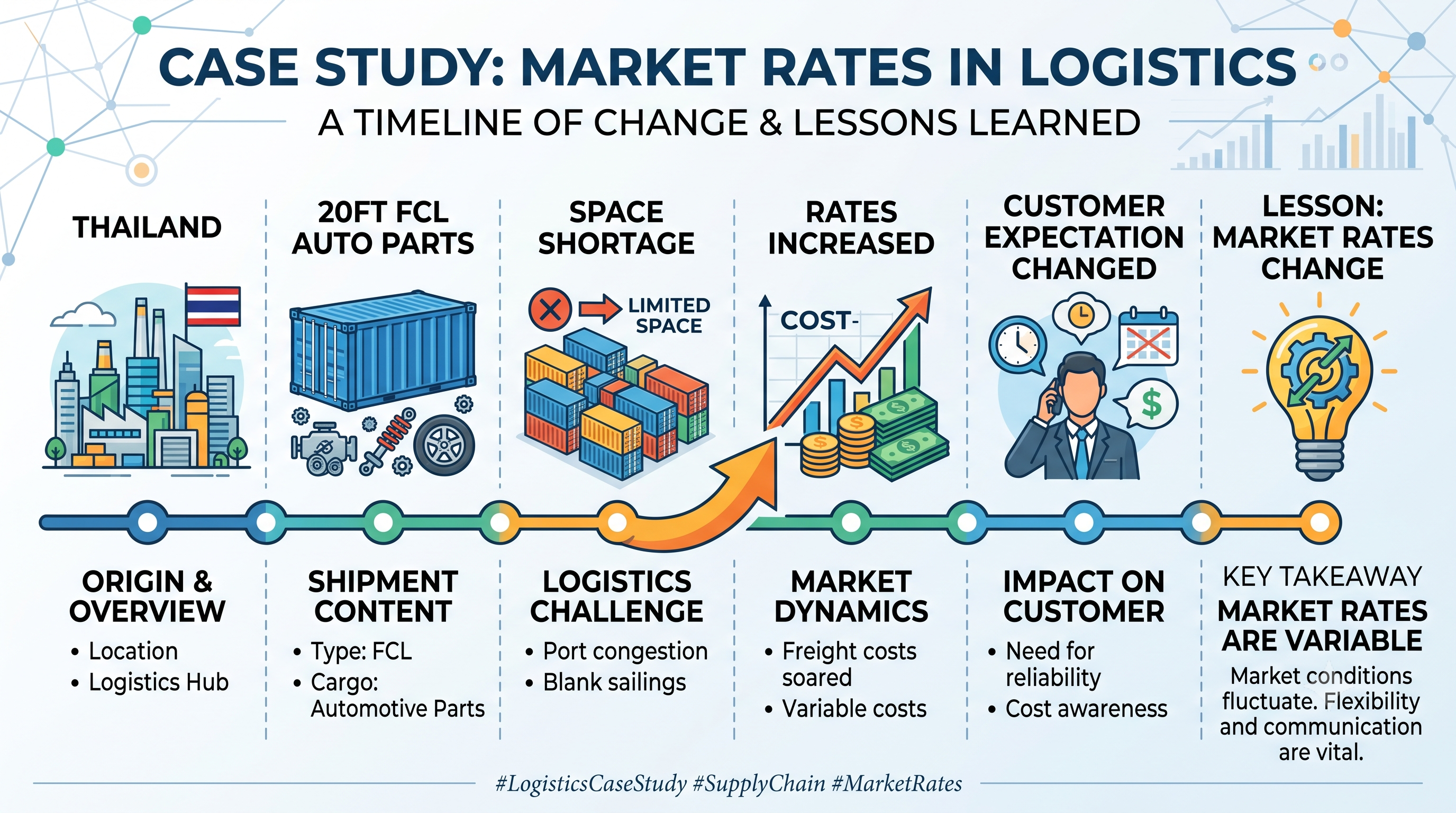
One shipment I handled involved auto parts moving from Thailand to Karachi, Pakistan.
The shipment was an FCL 20-foot container.
The customer expected the freight cost to be around USD 1,500 to USD 2,000 based on a previous shipment.
However, market conditions had changed.
Space availability from Thailand became limited, bookings were difficult to secure, and freight rates increased.
The challenge was explaining why the previous price was no longer possible.
The lesson I learned was:
Freight professionals must think like customers. When prices increase, customers need transparency and an explanation of what changed in the market.
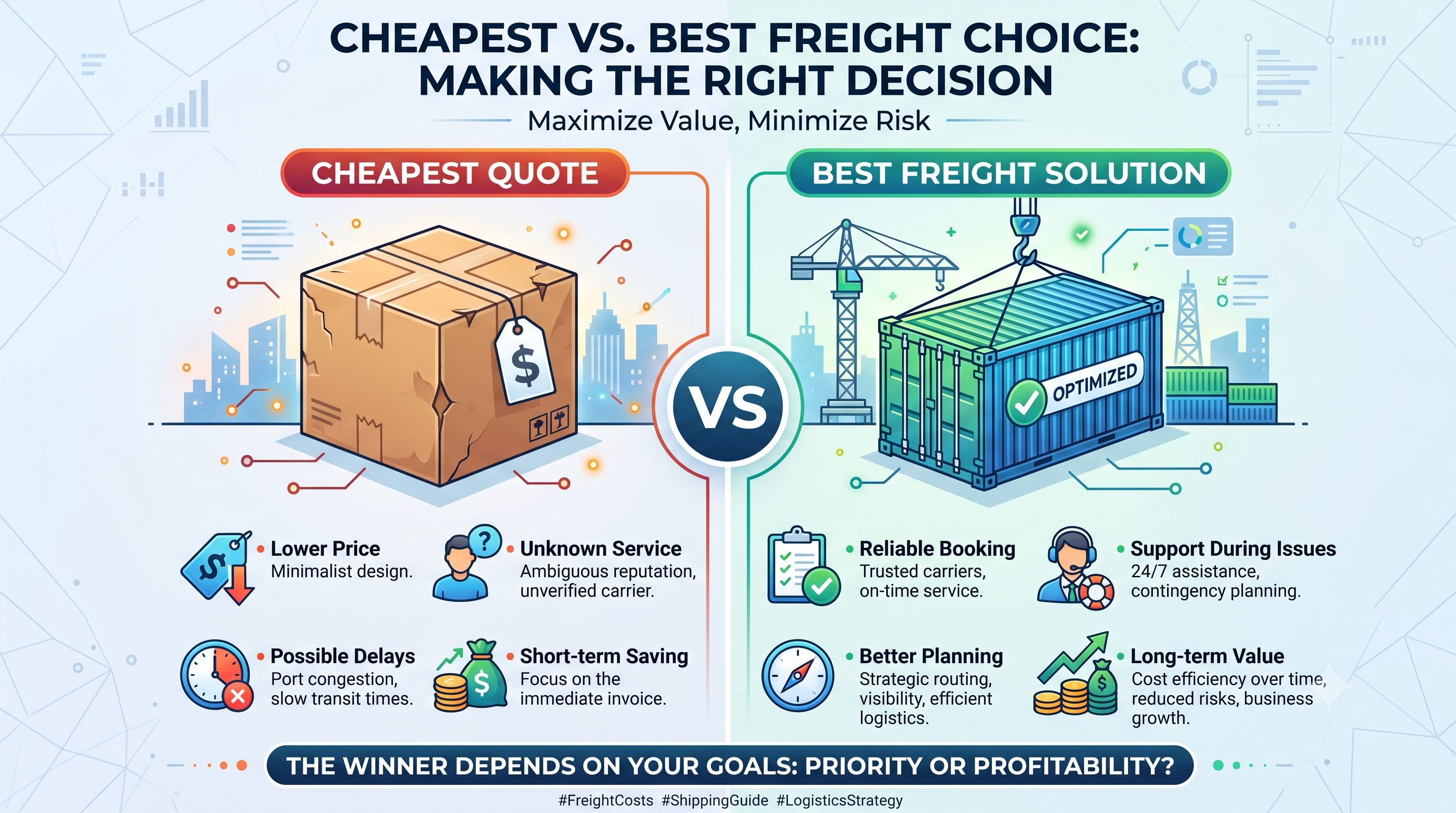
A common misconception is that the cheapest quote is always the best option.
I have personally seen situations where customers selected another forwarder because they offered a lower price.
However, after more than 15 days, the customer still could not secure a booking.
Eventually, they returned and said they would proceed regardless of the rate because reliability had become more important.
Freight cost is not only the number written on a quotation.
It also includes:
The best way to reduce freight costs is not always negotiating harder. It is planning better.
Businesses should:
1. Choose the right freight partner
Select a forwarder who can support during challenges, not only someone offering the lowest price.
2. Forecast shipments properly
Providing accurate shipment forecasts helps forwarders plan capacity and negotiate better options.
3. Understand urgency
Ask:
A customer in Spain wanted to ship from the nearest port because it was convenient.
However, after reviewing the route, I found that another port slightly farther away offered significantly better freight rates.
Although inland transportation costs increased, the ocean freight savings were much higher.
The alternative port also provided more sailing options.
The customer agreed, and the shipment was planned through the better option.
The lesson:
The closest port is not always the cheapest port. Freight optimization requires looking at the complete supply chain.
Before requesting a freight quote, prepare:
The more accurate information you provide, the better your freight solution will be.
The question "How much will it cost to ship my freight?" does not have a single answer.
The right freight cost depends on understanding the complete shipment.
A good logistics decision is not about finding the cheapest number. It is about finding the best balance between cost, reliability, and business needs.
Freight cost is calculated based on factors such as cargo type, weight, volume, route, transport mode, market conditions, and additional charges.
Freight rates change due to demand, capacity, fuel prices, carrier conditions, and global market situations.
No. A cheaper quote may create problems if the provider cannot secure space, manage delays, or provide proper support.
Better planning, accurate forecasting, choosing the right shipping method, and working with a reliable freight partner can reduce costs.
This article is provided for educational purposes only. Shipping costs, freight rates, container capacity, and operational requirements may vary by carrier, country, cargo type, and shipment conditions.