
Shipping Basics
Shipping Basics
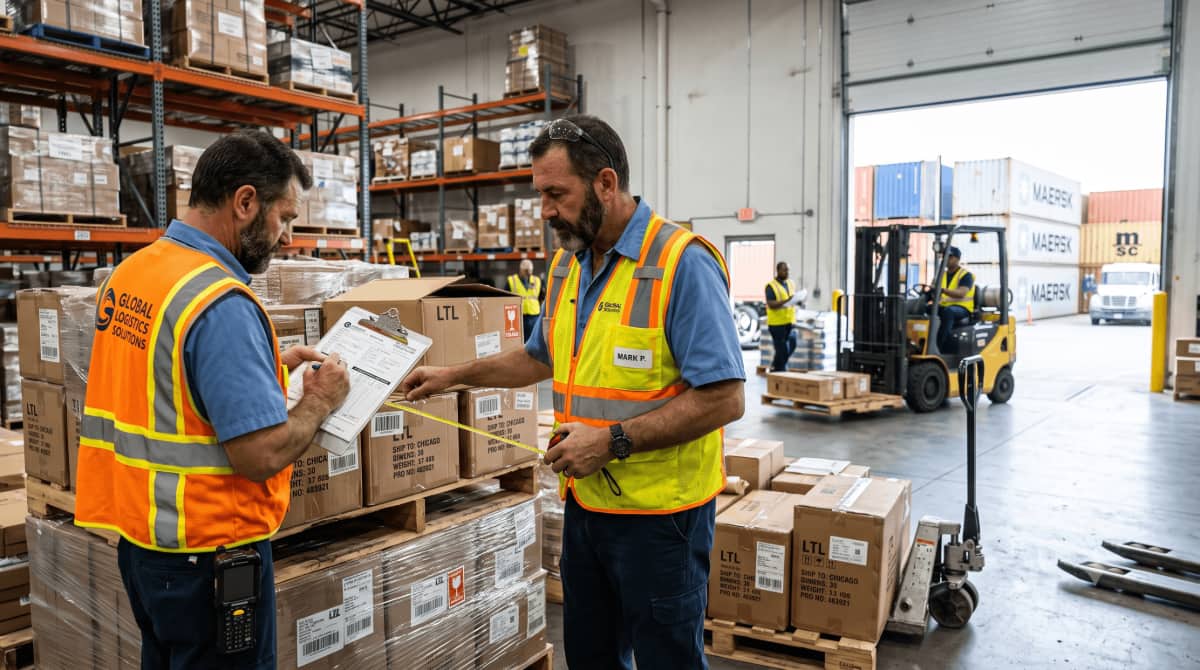
If you've ever requested a freight quote, you've probably been asked questions that seem unrelated at first. Carriers or freight forwarders may ask about the product, its packaging, dimensions, weight, or whether it requires any special handling. Many first-time shippers wonder why all of this information matters when they simply want to know the shipping cost.
The answer lies in freight classification.
Freight Class is one of the most important concepts in logistics because it helps carriers understand the characteristics of the cargo they are transporting. It influences freight pricing, handling requirements, equipment selection, and in many cases, the overall success of a shipment.
During my years in freight forwarding, I've learned that freight classification is much more than a number assigned to cargo. Every shipment tells a different story. Understanding those differences before a shipment moves can save businesses significant time, money, and operational headaches.
One of the biggest mistakes I see is assuming that every shipment is similar. Even two products with almost identical weights can require completely different handling, transportation methods, and pricing. That is why understanding Freight Class is essential for anyone involved in shipping, importing, exporting, or supply chain management.
Freight Class is a standardized way of categorizing cargo based on its transportation characteristics rather than simply its weight or dimensions.
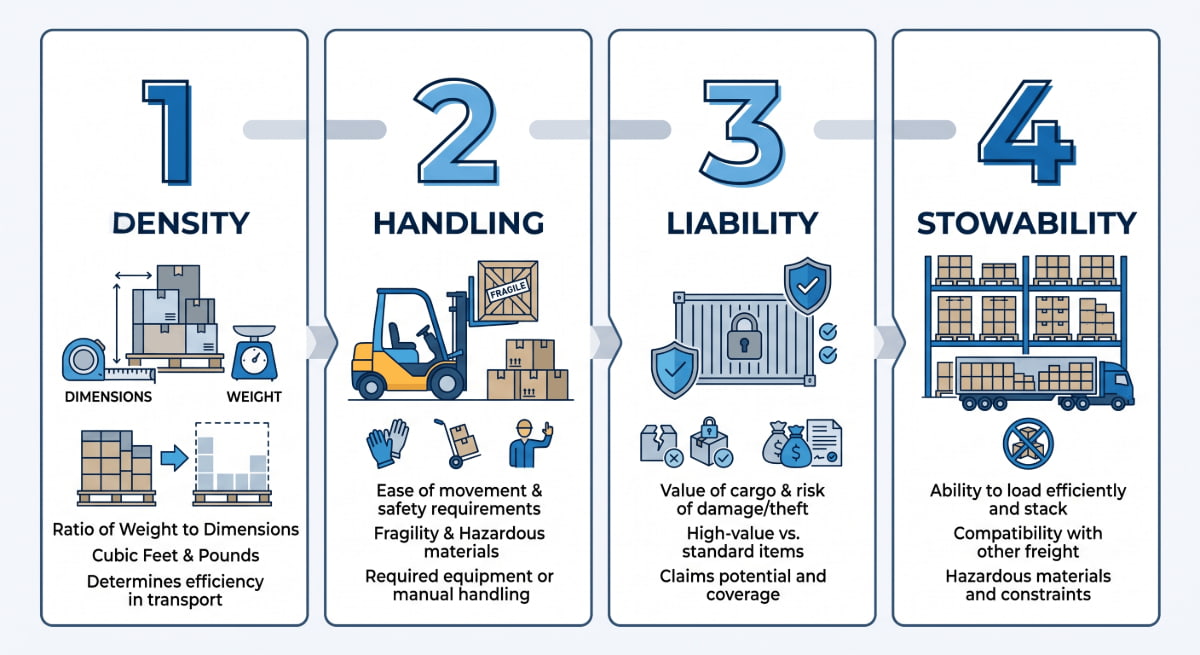
Carriers evaluate cargo using several important factors, including:
These characteristics help determine how much space the shipment occupies, how difficult it is to transport, and the level of responsibility the carrier assumes while moving it.
Think of Freight Class as a method of helping carriers understand how efficiently a shipment can travel through their transportation network.
For businesses, understanding Freight Class means obtaining more accurate freight quotations and avoiding unexpected charges after booking.
Many people believe freight costs are calculated only by weight and distance. While those factors are important, they are only part of the equation.
Freight classification affects almost every stage of transportation.
A correctly classified shipment helps:
Incorrect classification, on the other hand, can lead to reclassification charges, booking delays, additional handling fees, and operational complications.
As freight professionals, our responsibility is not only to arrange transportation but also to understand the cargo well enough to prevent these issues before they happen.
One of the earliest lessons in my freight forwarding career came from a perfume shipment.
At that stage, I was still learning the industry and had limited exposure to different cargo categories. I received the shipment details, prepared the quotation, and assumed I had everything required.
However, when it came time to book the shipment, the carrier repeatedly asked me for the Freight Class.
I wasn't able to answer confidently because I hadn't collected enough information about the product during the quotation stage.
That experience taught me something that has stayed with me throughout my career.
A freight quote is only as accurate as the information you receive from the customer.
Since then, I have never relied solely on a product name. I always try to understand exactly what the customer is shipping before discussing pricing or transportation options.
That single shipment completely changed my approach to freight planning.
One misunderstanding I frequently encounter is the belief that shipments only fall into two categories:
Many customers assume that if their shipment is not classified as dangerous goods, transportation becomes simple.
In reality, that is far from true.
Even non-dangerous cargo can require special handling, different packaging methods, unique transportation equipment, or additional planning depending on its size, shape, density, or value.
For example, furniture, machinery, bulk ingredients, electronics, and consumer products may all be non-dangerous goods, yet each requires a completely different transportation approach.
Helping customers understand this difference is an important part of our job as freight forwarders.
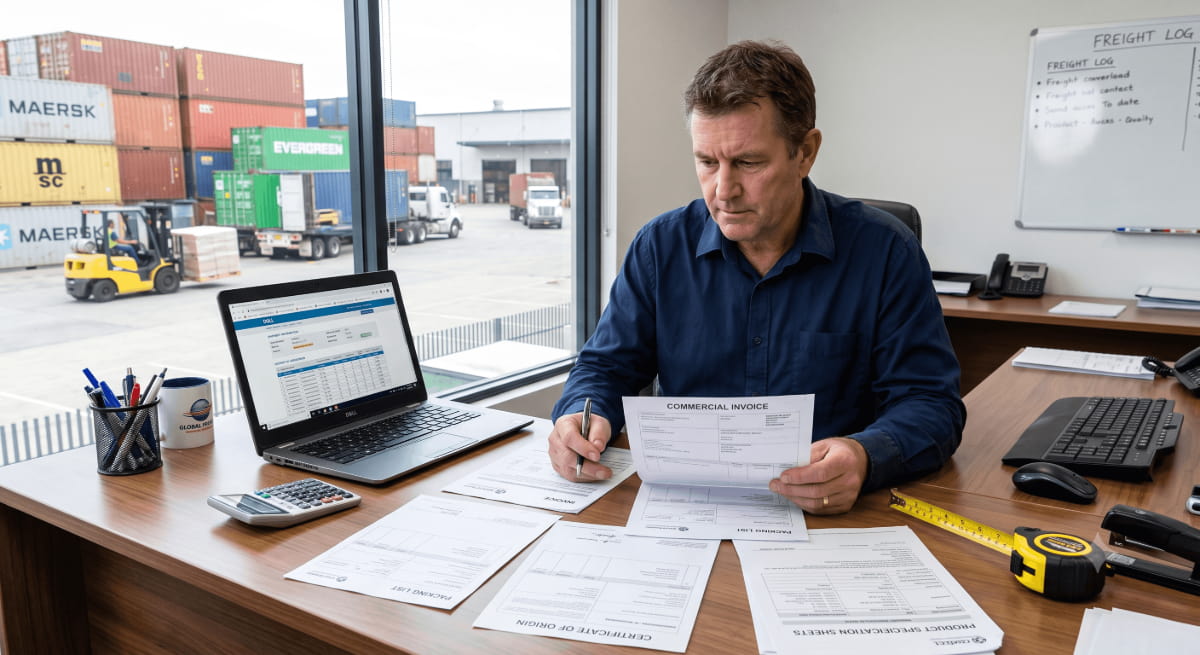
One habit I developed over the years is never making assumptions based solely on verbal information.
Whenever possible, I request documents such as:
Reviewing documentation often reveals details that customers may unintentionally overlook.
It also provides confidence when discussing freight costs, customs requirements, and transportation planning.
Good documentation creates better logistics decisions.
One shipment that stands out involved cargo the customer described as non-flammable.
Something about the product description made us question whether that information was accurate.
Instead of proceeding directly with booking, we requested additional documents, including the commercial invoice and packing list.
After reviewing the paperwork carefully, we discovered that the cargo was actually classified as flammable.
Had we relied only on the customer's initial description, the shipment could have been booked incorrectly.
That mistake might have resulted in penalties, revised freight charges, incorrect transportation arrangements, and operational delays.
Fortunately, the issue was identified before booking.
The customer was informed about the correct classification, the freight quotation was updated accordingly, and the shipment moved under the appropriate requirements.
This experience reinforced one simple lesson:
Always verify before you book.
Many people believe successful freight forwarding is about negotiating lower rates.
In reality, proper planning often creates greater savings than negotiation alone.
I experienced this while handling recurring palm oil shipments moving from Sri Lanka to Karachi and then onward to Uzbekistan.
These shipments involved more than ten containers every month.
Because of the shipment volume, even small mistakes would have been repeated across multiple containers.
Before moving the cargo, considerable time was spent researching product details, reviewing documentation, understanding how the shipment would be treated at Karachi Port, and ensuring the classification and supporting paperwork aligned correctly.
That preparation helped avoid customs complications and created a smoother transportation process.
Sometimes the best cost-saving strategy is preventing problems before they occur.
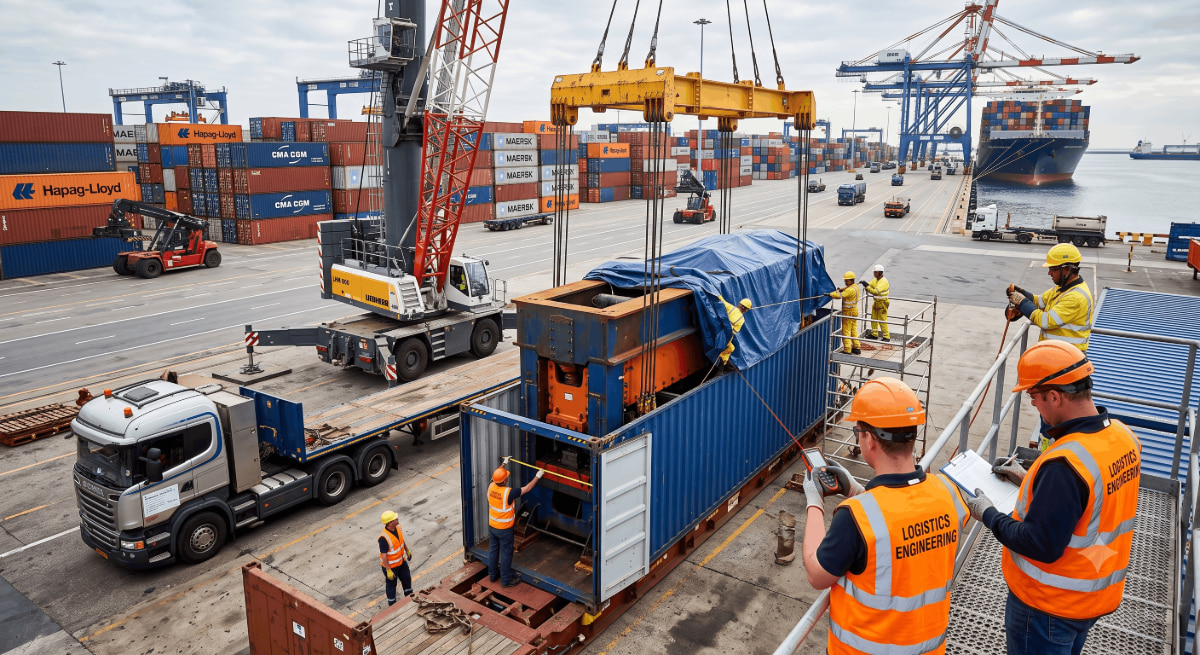
One of the most challenging shipments I handled involved oversized industrial machinery moving from Oman to Jebel Ali.
The cargo required an open-top container because of its dimensions.
However, every time we requested measurements, different dimensions were provided.
The quotation dimensions differed from later measurements, and even the shipper wasn't confident about the actual size.
Without accurate dimensions, obtaining reliable freight and trucking quotations became almost impossible.
After several unsuccessful attempts, we worked with our forwarding partner in Oman and arranged for someone to physically inspect and measure the machinery.
The inspection revealed significant differences between the documented dimensions and the actual equipment.
The machinery extended much higher than originally expected.
As a result, additional planning was required, including protective tarpaulin covering and informing trucking companies about the exposed cargo
Although arranging the inspection added time initially, it prevented much larger operational issues later.
Sometimes physically verifying cargo is the only reliable solution.
If you're shipping cargo for the first time, don't focus only on getting the cheapest quotation.
Instead, prepare complete and accurate shipment information before contacting a freight forwarder.
Know your product thoroughly.
Measure it correctly.
Understand how it is packed.
Provide accurate weights and dimensions.
Share clear documentation.
If your shipment involves oversized cargo, machinery, chemicals, or products with special handling requirements, mention those details immediately.
The more information your freight forwarder receives, the better they can plan your shipment and provide an accurate quotation.
Good communication saves both time and money.
Some of the most common mistakes I have seen include:
Avoiding these mistakes can significantly reduce transportation problems.
Freight Class is not simply another logistics term. It is a fundamental part of shipment planning that affects pricing, transportation, documentation, and operational efficiency.
Throughout my career, I have learned that every shipment has unique requirements. Whether it was a perfume shipment that introduced me to freight classification, verifying the true nature of flammable cargo, planning recurring palm oil shipments, or resolving dimension issues for oversized machinery, each experience reinforced the same lesson.
Understanding your cargo before it moves is always easier and less expensive than solving problems after the shipment is already in transit.
For importers, exporters, and logistics professionals alike, taking the time to understand Freight Class is an investment that pays off in smoother operations, fewer surprises, and better long-term shipping decisions.
Freight Class is a standardized system used to categorize cargo based on its transportation characteristics, including density, handling requirements, liability, and stowability. Carriers use Freight Class to determine shipping rates, equipment requirements, and how cargo should be handled during transit. For shippers, understanding Freight Class helps ensure accurate freight quotes, smoother transportation, and fewer unexpected charges.
Freight Class is important because it directly affects shipping costs, carrier pricing, transportation planning, and cargo handling.
A correctly classified shipment can:
Incorrect freight classification can result in additional costs, penalties, or shipment disruptions.
Freight Class is determined by evaluating several key factors, including:
Carriers also review shipment dimensions, packaging, weight, product characteristics, and supporting documentation before confirming the appropriate Freight Class.
Yes. Freight Class is one of the major factors that influence shipping costs. Generally, shipments that are easier to handle, denser, and occupy less space may qualify for lower transportation costs. Cargo that requires special handling, takes up more space, or presents higher risk may result in higher freight charges. Accurate classification helps ensure you receive realistic freight quotations.
No. Freight Class and HS Codes serve different purposes.
Freight Class is used by carriers to determine transportation pricing and handling requirements
HS Code (Harmonized System Code) is used by customs authorities worldwide to classify products for import and export, calculate duties, and apply trade regulations
Both are important, but they are used for different stages of the shipping process.
Freight Class is primarily associated with Less Than Truckload (LTL) road freight, especially in countries that use standardized freight classification systems.Sea freight and air freight generally use different pricing methods, such as:
While requirements may vary depending on the shipment, it is helpful to have:
Providing complete documentation helps freight forwarders classify cargo more accurately.
Yes. Incorrect Freight Class can lead to:
Freight Class and Dangerous Goods are not the same. Dangerous Goods (DG) refer to cargo that poses risks such as being flammable, corrosive, toxic, or explosive and must comply with specific safety regulations. Freight Class, on the other hand, focuses on transportation characteristics such as density, handling, liability, and stowability. A shipment can be non-dangerous but still require a specific Freight Class for transportation purposes.
Start by gathering complete information about your shipment, including:
AI can be a useful research tool for understanding product characteristics, reviewing documentation, and identifying potential classification requirements. However, AI should not replace professional judgment. Final Freight Class decisions should always be verified using official documentation, carrier guidelines, and experienced logistics professionals, especially for complex or high-value shipments.
One of the biggest mistakes is assuming every shipment is similar or providing incomplete shipment information. Incorrect dimensions, inaccurate product descriptions, or missing documentation can result in revised freight rates, delays, and additional charges. Taking time to verify shipment details before requesting a quotation helps ensure smoother transportation and more accurate pricing.
This article is provided for educational purposes only. Shipping costs, freight rates, container capacity, and operational requirements may vary by carrier, country, cargo type, and shipment conditions.