
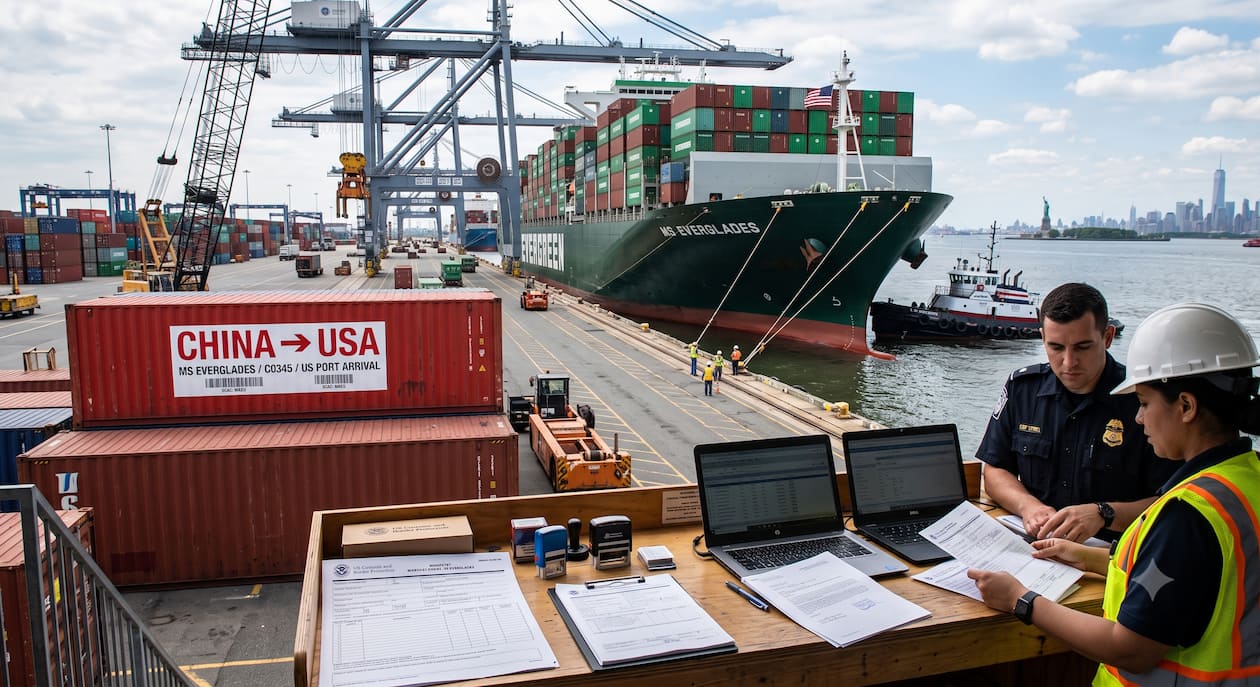
Shipping Guide
Shipping Guide
Many first-time importers start with a simple idea: find a product on Alibaba, place an order, and have it delivered to their warehouse in the US.
The reality is slightly different.
I have seen many new businesses focus heavily on finding the cheapest supplier but ignore the logistics side. A product that looks profitable at the factory price can become expensive after adding international shipping, customs duties, delays, storage charges, and unexpected fees.
For example, a US-based retailer may find a supplier offering phone accessories at $1 per unit. The price looks attractive until they calculate ocean freight, customs clearance, import duties, inland transportation, and warehouse handling. Suddenly, the actual landed cost is much higher than expected.
Understanding how to import from China to the US helps businesses avoid expensive mistakes and plan their shipments properly.
The import process involves several stages:
This guide explains the complete process in practical steps, based on how international shipments are handled in real freight operations.
Importing from China to the US means purchasing goods from a Chinese supplier and transporting them into the United States for business use, resale, or manufacturing.
The process involves two countries with different regulations, documentation requirements, and shipping procedures.
A typical China-to-US import shipment involves:
| Stage | Responsible Party | Main Activity |
|---|---|---|
| Product sourcing | Importer | Finding supplier and negotiating terms |
| Manufacturing | Supplier | Producing and preparing goods |
| Export handling | China freight agent/supplier | Export documentation and pickup |
| International transportation | Freight forwarder/carrier | Ocean or air shipment |
| Customs clearance | Importer/customs broker | Duty payment and compliance |
| Final delivery | Trucking company | Delivery to warehouse or customer |
Unlike domestic shipping, international importing involves multiple companies working together.
A shipment may include:
A delay at any point can affect the entire supply chain.
The basic flow looks like this:
Supplier in China → Export Preparation → International Shipping → US Customs Clearance → Final Delivery
For most commercial shipments, the importer needs to understand four key areas:
Before discussing shipping, the first challenge is choosing the right supplier.
Many beginners make the mistake of selecting a supplier only based on price.
A supplier offering the lowest price may have:
Experienced importers usually check:
A cheaper supplier is not always cheaper after considering rejected goods, delays, or rework.
Before placing an order, the importer should understand their responsibilities.
In the US, the importer of record is responsible for:
Many new businesses assume the supplier handles everything.
Sometimes suppliers offer terms like DDP (Delivered Duty Paid) where they arrange delivery including duties, but importers should understand what is included and who is legally responsible.
Importing from China can create excellent opportunities for businesses because China has a large manufacturing base and competitive production costs.
However, successful importing is not only about finding cheap products.
The biggest difference between profitable and unprofitable imports usually comes from planning.
A well-planned shipment considers:
For example:
A small business importing seasonal products may choose air freight because speed matters more than cost.
A company importing thousands of units with predictable demand may choose ocean freight because the lower shipping cost improves margins.
Choosing the wrong shipping method can affect:
Common issues usually happen because businesses focus only on the supplier price.
Some examples:
Choosing the wrong Incoterms
A buyer agrees to FOB, CIF, or DDP without understanding what costs are included.
Underestimating shipping costs
Freight rates can change depending on
Incorrect product classification
The HS code determines duty rates and customs requirements. Incorrect classification can create delays or additional costs.
Poor documentation
Missing or inaccurate documents can delay customs clearance.
Typical documents include:
Importing successfully is less about moving a shipment from one country to another and more about managing the entire supply chain.
Importing successfully is less about moving a shipment from one country to another and more about managing the entire supply chain.
A mistake during supplier selection, documentation, or shipping planning can create delays that cost more than the original freight bill.
Below is the practical step-by-step process followed by many businesses importing commercial goods from China into the United States.
The first step is finding a supplier that can consistently deliver the product quality you need.
Popular sourcing platforms include:
However, finding a supplier is only the beginning.
Many new importers make the mistake of trusting online profiles without proper verification.
Before placing a large order, check:
Supplier Verification Checklist
Ordering samples is one of the best ways to reduce risk.
A supplier may show excellent product photos online, but the actual product quality can be different.
Practical Example
A US retailer ordered 10,000 LED lights from a supplier after seeing attractive product images online. The first shipment arrived with a high failure rate because the buyer skipped sample testing.
The company eventually spent more money replacing products than they would have spent on proper quality inspection before shipment.
Lesson: A low product price means nothing if the goods cannot be sold.
Before importing any product, confirm whether it has specific US requirements.
Some products have stricter regulations than others.
Examples:
| Product Category | Possible Requirements |
|---|---|
| Electronics | FCC compliance |
| Food products | FDA requirements |
| Cosmetics | FDA regulations |
| Children's products | Safety testing |
| Medical products | FDA approval |
| Batteries | Transportation restrictions |
A common mistake is manufacturing the product first and checking compliance later.
If customs or regulatory agencies reject the shipment, the importer may face:
Checking requirements before production saves significant problems later.
When buying from China, suppliers usually quote prices using international trade terms called incoterms 2020 explained
These terms define who is responsible for costs and risks.
Common Incoterms include:
| Incoterm | Meaning | Buyer Responsibility |
|---|---|---|
| EXW | Supplier makes goods available at factory | Almost everything after pickup |
| FOB | Supplier delivers goods to Chinese port | Ocean freight onward |
| CIF | Supplier pays freight to destination port | Import clearance and delivery |
| DDP | Supplier handles delivery including duties | Usually least involvement |
For many first-time importers, FOB is a common choice because it provides more control over freight arrangements.
However, the best option depends on:
Practical Tip
Never accept a shipping quote without asking:
"Does this include all charges until my final warehouse?"
Many misunderstandings happen because buyers compare incomplete quotes.
The supplier price is not your final cost.
Your actual product cost is called the landed cost
A simple formula:
Product Cost + Shipping + Insurance + Customs Duty + Import Fees + Inland Transportation = Landed Cost
Example:
| Cost Element | Amount |
|---|---|
| Product cost | $10,000 |
| Ocean freight | $1,500 |
| Customs duty | $800 |
| Customs broker | $150 |
| Port charges | $300 |
| Truck delivery | $500 |
| Total landed cost | $13,250 |
The actual cost per unit is based on $13,250, not the original $10,000 supplier invoice.
Many businesses lose profitability because they calculate margins using only the factory price.
The two main options are:
The right choice depends on your product, budget, and urgency.
Ocean Freight From China to the US
Ocean shipping is the most common option for large shipments.
Suitable for:
Advantages:
Disadvantages:
Typical container options:
Full Container Load (FCL)
You use the entire container.
Common sizes:
Best for larger shipments.
Less Than Container Load (LCL)
Your cargo shares container space with other shipments.
Best for:
Air Freight From China to the US
Air freight is faster but more expensive.
Suitable for:
Advantages:
Disadvantages:
A common mistake is using air freight for products with low profit margins.
A freight forwarder acts as a logistics partner managing transportation from China to the US.
A good freight forwarder can help with:
Many new importers believe the cheapest freight quote is always the best. In reality, the cheapest provider may exclude important charges.
Always ask for a detailed quotation showing:
A professional forwarder should explain the complete shipment process, not just provide a price.
Proper documentation is one of the most important parts of importing.
Common documents include:
Commercial Invoice
Packing List
Bill of Lading (B/L)
Used for ocean shipments.
Used for ocean shipments.
It acts as:
Air Waybill (AWB)
Used for air freight shipments.
Used for air freight shipments.
Prepared by the customs broker for US Customs clearance.
When your shipment arrives at a US port or airport, it must clear customs before delivery.
The importer usually works with a licensed customs broker.
The customs broker helps with:
US Customs and Border Protection (CBP) reviews shipments to ensure compliance.
Possible issues during clearance:
These issues can delay cargo release.
Import duties depend on:
The duty rate can vary significantly between products.
For example:
A textile product and an electronic component may have completely different duty rates.
Never assume all Chinese imports have the same duty percentage.
Always verify the correct HS classification before shipping.
After customs clearance, the shipment moves to the final destination.
Options include:
For e-commerce sellers, the final destination may be:
At this stage, tracking and coordination are important.
A container sitting at a port can create additional storage and demurrage charges.
Even well-planned shipments can face unexpected problems.
Common challenges include:
Port Congestion
Busy seasons can create delays at major ports
Examples:
Factory Delays
Production delays can happen due to:
Documentation Errors
Small mistakes in invoices or packing lists can delay clearance.
Changing Freight Rates
Ocean freight prices fluctuate due to:
Experienced importers always keep some buffer time and budget.
Importing can be profitable, but many businesses lose money because they underestimate the complexity involved.
Below are some of the most common mistakes seen among new importers.
One of the biggest mistakes is selecting the cheapest supplier without checking reliability.
A supplier offering a product at $5 instead of $6 may look attractive, but problems can appear later:
A reliable supplier who charges slightly more can often save money by reducing problems.
Practical advice: Always test with a small order before committing to a large shipment.
Many beginners calculate profit like this:
Many beginners calculate profit like this:
This calculation is incomplete.
The real calculation should include:
A product that appears profitable at the factory level may have a very different margin after arriving in the US.
Choosing between air freight and ocean freight requires understanding your business needs.
A common mistake:
A company ships low-cost, high-volume products by air because they need inventory quickly.
The shipment arrives on time, but the freight cost eliminates the profit margin.
Another company may choose ocean freight for urgent seasonal inventory and miss their selling window.
The correct choice depends on:
Some importers assume customs only checks paperwork.
However, certain products must meet specific US regulations.
Examples:
Ignoring compliance requirements can result in:
Always confirm requirements before manufacturing.
Many importers agree to shipping terms without understanding their responsibility.
For example:
A buyer accepts an attractive supplier quote under DDP terms but does not understand:
Before accepting any quote, understand exactly what the supplier is providing.
Many businesses inspect products only after they arrive.
By then, fixing quality issues becomes expensive.
A pre-shipment inspection can identify:
It is usually cheaper to solve problems in China than after goods arrive in the US.
These practical tips can help reduce problems and improve profitability.
For your first order, avoid importing a large quantity immediately.
A smaller shipment helps you understand:
Once the process works, increase your order volume.
Successful importing usually depends on strong relationships.
Important partners include:
A good logistics partner can often prevent problems before they happen.
Freight costs change frequently.
Unexpected costs may include:
Experienced importers avoid planning with zero margin.
Keeping a cost buffer protects your business.
The Harmonized System (HS) code is used to classify products internationally.
It affects:
Incorrect classification can lead to:
Work with a customs broker when uncertain.
Shipping demand increases during certain periods.
Examples:
During these periods:
Experienced importers plan inventory months ahead.
Good documentation prevents unnecessary delays.
Maintain records of:
US import records are typically required to be maintained for several years.
Importing from China to the US can create strong opportunities for businesses, but success depends on proper planning.
The biggest mistake new importers make is focusing only on product prices and ignoring logistics costs, regulations, and supply chain planning.
A successful import process requires:
Start small, learn the process, and improve with every shipment.
International trade becomes much easier when you understand how each step connects from the factory floor in China to the final delivery point in the United States.
For most commercial shipments, ocean freight is usually the most economical option, especially for larger volumes.
LCL shipping is suitable for smaller shipments, while FCL containers are generally more cost-effective for larger quantities.
The cheapest option depends on:
Transit time depends on the shipping method and destination. Typical estimates:
| Shipping Method | Approximate Time |
|---|---|
| Air freight | 5–10 days |
| Ocean freight | 20–45+ days |
| Express courier | 3–7 days |
Actual times vary due to:
A customs broker is not always legally required for every shipment, but many businesses use one because customs regulations can be complex.
A broker helps with:
For first-time commercial importers, working with a broker can reduce mistakes.
Import duty depends on the product's HS code and applicable regulations.
There is no single duty rate for all Chinese imports.
The duty can vary based on:
The duty can vary based on:
Yes, individuals can import certain products, but commercial importing usually requires proper business documentation.
For regular importing, businesses commonly use:
Requirements depend on the product and shipment type.
Alibaba is widely used by international buyers, but buyers should still verify suppliers.
Recommended steps:
The platform connects buyers and suppliers, but due diligence is still the buyer's responsibility.
For beginners and businesses handling commercial shipments, a freight forwarder can simplify the process.
They can assist with:
The right forwarder saves time and reduces operational mistakes.
This article is provided for educational purposes only. Shipping costs, freight rates, container capacity, and operational requirements may vary by carrier, country, cargo type, and shipment conditions.